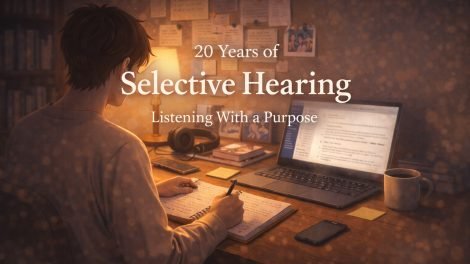






I can say with certainty that music journalism has changed over the past twenty years. When I was growing up, staying in tune with the music world largely meant relying on music magazines. There was no constant stream of content, no algorithm feeding updates around the clock — just a handful of trusted voices and the time to sit with what they had to say.
When I started Selective Hearing, that was the template I naturally gravitated toward. Long-form, magazine-style writing paired with concise reviews that didn’t try to sugarcoat opinions or hit arbitrary word counts. It was simply a way of writing about music that felt familiar and honest to me.
As I mentioned in the opening article of this series, blogging was still in its relative infancy at the time. The idea of independent voices publishing their thoughts freely hadn’t yet evolved into what we know today.
To be completely honest, writing about music didn’t come easily to me back then. I was still very much a listener, figuring things out as I went. Who was I to start putting my opinions about what I was listening to out into the world?
But I persisted and chose what some might call the “hard mode” of music writing. I decided to write about what I was into at the time: Japanese music. Since I didn’t understand the language very well, my writing naturally focused on how the music made me feel — whether it had a groove or an energy that I wasn’t finding in the Western music I was slowly phasing out of my listening habits.
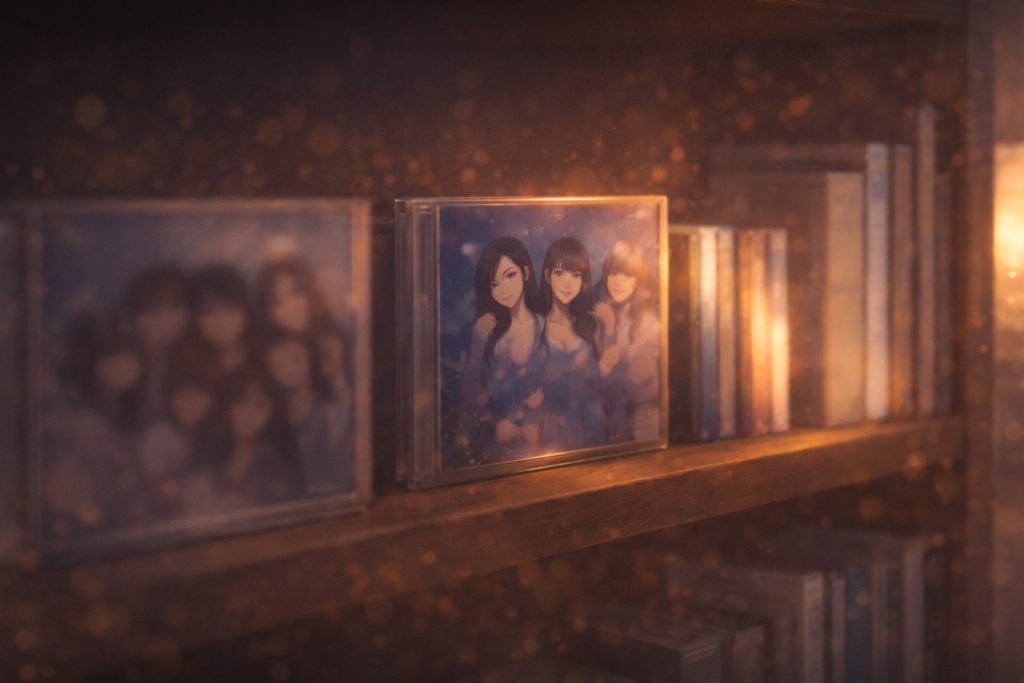
The language barrier forced me to listen differently at first, at least until my language skills caught up. In hindsight, I probably caught a bit of a break, since much of what I was listening to at the time was Japanese idol pop music that was often more about generating feeling and emotional attachment to the performers than about lyrical or musical depth.
Looking back now, I can admit that my early reviews were brief and light on substance. But everyone has to start somewhere, right?
Once I began expanding beyond Japanese idol pop, that’s when I really started to understand who I was as a writer. Each new discovery became a small challenge, pushing me to articulate thoughts about songs and artists I wasn’t yet familiar with, and to trust my instincts rather than lean on comfort or familiarity.

Writing regularly forced me to find my voice. Over the years, that voice has earned both supporters and detractors, particularly when discussions move beyond the music itself and into artists’ activities outside of it — a territory that can quickly become a hot-button issue. I’ve always approached those conversations pragmatically, even when that outlook doesn’t align with the kind of unquestioning loyalty that can sometimes take hold within fandoms.
In the current environment, writing about music probably doesn’t carry the same weight it did when I started. With attention spans shrinking and information increasingly consumed in fragments, asking someone to sit with a few uninterrupted paragraphs is no small request. It’s simply another obstacle that writing has had to navigate in the modern era of music journalism.
I’d be lying if I said I wasn’t sometimes surprised when someone makes it this far into an article, rather than asking ChatGPT to summarise it in a sentence or two.
And yet, I keep writing. Not because I think it reaches everyone, but because I know it still reaches someone. There are still readers who value the written word, who appreciate ideas being explored thoughtfully rather than compressed for speed, and that’s reason enough for me to continue.
So why do I keep at this, even if it isn’t always the most efficient way to get my message — or the site’s message — out into the world?
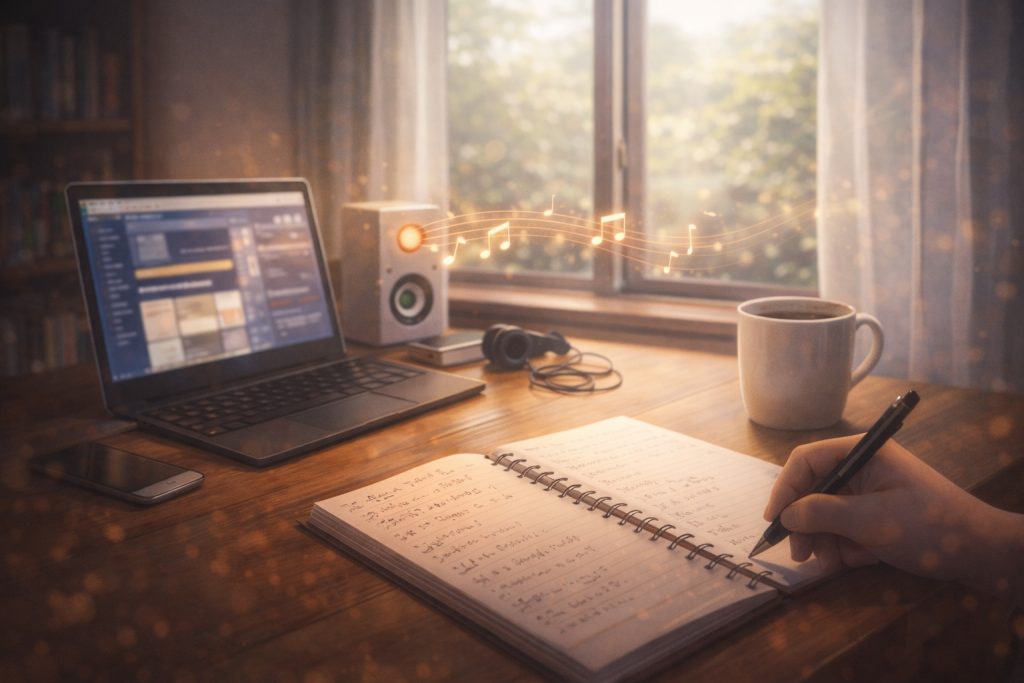
For one, after so many repetitions, writing has become second nature to me. When a topic genuinely interests me, it doesn’t take long to organise my thoughts and get them down, whether that’s on paper or in a draft I can flesh out later. Once I get going, I usually have something close to publication-ready before I even realise it.
Writing is also far less time-consuming than formats like podcasting or video production. I can sit down, work through an idea, publish it, and move on to the other projects that keep Selective Hearing running. That efficiency matters, especially for a site that’s always been built on limited time and resources.
Lastly — and perhaps most importantly — writing allows me to communicate more clearly than I often can in real time. In person or on a podcast, I tend to default to self-deprecation or sarcasm, which can sometimes undercut the point I’m trying to make. A carefully considered essay or review gives me the space to say what I actually mean, without the noise that can come from speaking off the cuff.
Ultimately, writing about music isn’t about reaching everyone, agreeing with the collective, or racing to publish the most timely take. Trends will come and go. Flavours of the month will always appear, and if we miss the boat, that’s okay.
For me, it’s about processing what I hear, sharing honest thoughts, and letting the music — and the writing — speak for itself. Whatever resonates with readers after that is simply a bonus.